
The wealth of ancient grains flooding the market can be really confusing; how do you cook them? Are they better or healthier than the grains I am more accustomed to?
At Shasha Horizon, we understand that ancient grains represent a return to nutritional wisdom. Modern agriculture’s focus on high-yield crops like wheat and corn has traded nutrition for yield, resulting in grains with lower nutrient density and higher gluten content than their ancient predecessors. This article introduces five ancient grains with superior nutritional profiles, explains why they’re healthier than modern grains, and provides practical cooking instructions for each.
Understanding Ancient Grains: Why Heritage Grains Are Nutritionally Superior
What Are Ancient Grains and How Do They Differ From Modern Grains?
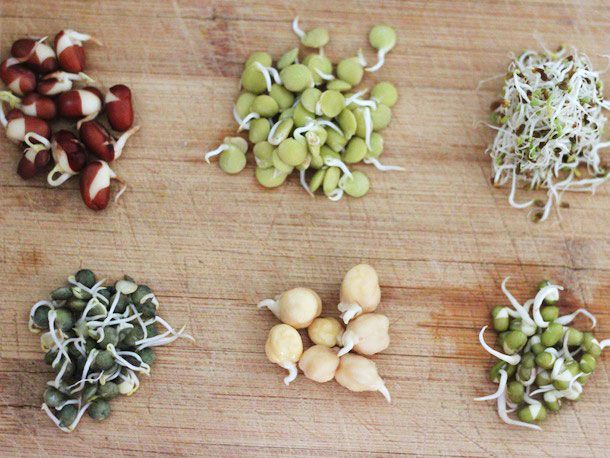
Ancient grains or heritage grains have been around for thousands of years. They can be more nutritious than corn or wheat, but only if they are organic whole grains or sprouted grains.
This distinction is crucial: an ancient grain processed into refined flour loses its nutritional advantage. The grain’s nutrition concentrates in the bran, germ, and fiber—the parts removed during refinement. Ancient grains only provide nutritional superiority when consumed as whole grains or sprouted grains preserving all components.
The Nutritional Advantage: Why Heritage Grains Outperform Modern Varieties
Ancient grains escaped the genetic modification and selective breeding that reduced modern wheat and corn to high-yield but nutritionally diminished crops. Modern wheat, through decades of breeding for yield and disease resistance, has been modified so extensively that it bears little resemblance to the wheat of 100 years ago.
Ancient grains, unchanged for thousands of years, retain nutritional profiles evolved over millennia. They provide:
- Higher micronutrient density – More vitamins and minerals per calorie
- Lower gluten content – Some ancient grains contain substantially less gluten
- Better amino acid profiles – More complete protein than modern grains
- Higher fiber content – Supporting digestive health and satiety
- Lower glycemic impact – Preventing blood sugar spikes
- More phytonutrients – Plant compounds with antioxidant and anti-inflammatory properties
Learn about Shasha Horizon’s commitment to ancient grain nutrition.
Ancient Grain 1: Spelt—The Nutty, Easily Digestible Heritage Grain
Spelt’s Nutritional Profile and Digestibility Advantage
Spelt is a popular ancient grain with a delicious nutty flavor that is easy to digest. Spelt is a wonderful source of fiber, folate, magnesium and selenium and has much lower levels of gluten.
Spelt’s lower gluten content is particularly significant. Modern wheat contains approximately 14% gluten; spelt contains significantly less. This makes spelt substantially more digestible for people with mild gluten sensitivity (though not appropriate for celiac disease, which requires complete gluten avoidance).
Spelt’s nutritional benefits:
- Fiber – Supporting digestive health and satiety
- Folate – Essential for cell division and DNA synthesis
- Magnesium – Supporting muscle function and energy production
- Selenium – Powerful antioxidant protecting cells from damage
- B vitamins – Supporting energy metabolism
- Easier digestion – Lower gluten content than modern wheat
Cooking With Spelt: Baking and Serving Tips
You can bake with spelt flour, but reduce the amount of liquid you use by 25% so as not to make the dough sticky. Look out for spelt pasta and organic breads which contain spelt.
Spelt flour absorbs less liquid than wheat flour, requiring recipe modification. When converting recipes from wheat to spelt:
- Reduce liquid by 25% – Compensate for spelt’s different absorption rate
- Mix carefully – Spelt dough requires gentler handling than wheat dough
- Don’t overwork – Spelt develops gluten more quickly; minimize mixing
- Use for baking – Bread, pastries, cookies all work well with spelt
- Purchase spelt products – Spelt pasta, crackers, and organic sprouted spelt bread provide convenient alternatives
Ancient Grain 2: Millet—The Gluten-Free, Magnesium-Rich Grain
Why Millet Is Perfect for Gluten-Intolerant Diets
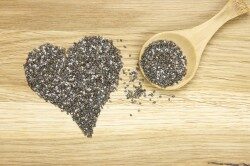
A gluten-free grain, millet is high in fiber and an excellent source of B vitamins and protein. Millet is also packed with magnesium, which makes it great for heart health.
Millet is naturally gluten-free, making it an excellent choice for anyone avoiding gluten. Unlike quinoa and amaranth (which must be triple-rinsed to remove bitter saponins), millet can be cooked immediately without extensive preparation.
Millet’s nutritional benefits:
- Gluten-free – Ideal for celiac disease and gluten sensitivity
- High in fiber – Supporting digestive health
- B vitamins – Thiamine, niacin, and folate for energy metabolism
- Complete protein – Containing all nine essential amino acids
- Magnesium – Essential for heart health and blood pressure regulation
- Easily digestible – Gentle on sensitive digestive systems
Cooking Millet: Simple Stovetop Method
When cooking with millet, use two and a half cups of water for every cup of millet. Bring to the boil and leave to simmer for around 25 minutes or until the millet reaches the desired consistency.
Millet cooking instructions:
- Rinse millet – Brief rinse removes any debris (no need for extensive washing like quinoa)
- Bring water to boil – 2.5 cups water per 1 cup millet
- Add millet – Stir to combine with boiling water
- Reduce heat – Simmer covered for 20-25 minutes
- Check consistency – Millet should be tender; adjust cooking time if needed
- Fluff with fork – Separate grains after cooking
- Serve – Use as rice substitute, in grain bowls, or mixed with vegetables
Ancient Grain 3: Amaranth—The High-Protein Gluten-Free Superfood
Amaranth’s Complete Protein Profile and Cholesterol Benefits
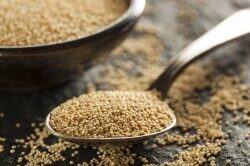
Amaranth is gluten-free so it’s perfect for the gluten intolerant. Amaranth is high in protein, fiber and amino acids. Amaranth has been shown to help reduce cholesterol too.
Amaranth is unique among grains for its complete protein profile—it contains all nine essential amino acids, making it a genuinely complete protein source. This is rare in plant foods and makes amaranth particularly valuable for vegetarian and vegan diets.
Amaranth’s nutritional benefits:
- Complete protein – All nine essential amino acids
- High fiber – Supporting digestive health and satiety
- Gluten-free – Ideal for celiac disease
- Cholesterol-lowering – Studies document LDL cholesterol reduction
- High in minerals – Calcium, magnesium, phosphorus, iron
- Easily digestible – Gentle on sensitive digestive systems
Cooking Amaranth: The High Water Ratio Method
You can simply boil amaranth and use it in place of rice. It requires about 6 parts water for every part of amaranth so if you are cooking one cup of amaranth, use 6 cups of water at a gentle boil for 15 to 20 minutes. You can also add amaranth to stews, soups, and salads.
Amaranth cooking instructions:
- Use high water ratio – 6 cups water per 1 cup amaranth
- Bring water to boil – Before adding grain
- Add amaranth – Stir to combine with boiling water
- Gentle boil – Maintain low boil (not vigorous)
- Cook 15-20 minutes – Until water is absorbed and grain is tender
- Drain if needed – Excess water can be drained
- Fluff – Amaranth becomes slightly gelatinous when cooked, which is normal
- Use versatilely – As grain side dish, in soups, stews, or salads
Ancient Grain 4: Quinoa—The Complete Protein Seed Masquerading as a Grain
Why Quinoa Is a Complete Protein Despite Being a Seed
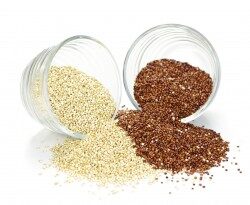
While most people refer to quinoa as a grain, it is actually a seed from a vegetable related to Swiss chard. It is really gaining in popularity thanks to its great flavor and high nutritional value.
This distinction matters: quinoa is technically a seed, not a grain. However, it’s nutritionally and culinarily similar to grains, making it appropriately classified with ancient grains for dietary purposes. Its status as a complete protein makes it unique among plant-based staple foods.
Quinoa’s nutritional benefits:
- Complete protein – All nine essential amino acids; one of few plant complete proteins
- High fiber – Supporting digestive health
- Rich in riboflavin – Supporting energy metabolism
- Gluten-free – Naturally free of gluten
- Low calorie – Only 172 calories per ¼ cup
- Complex carbohydrate – Low glycemic index preventing blood sugar spikes
- Mineral-rich – Magnesium, phosphorus, iron, zinc
- Weight management support – High protein and fiber create satiety
Why Quinoa Is Excellent for Weight Management
High in protein, fiber and riboflavin, quinoa is also gluten-free and has only 172 calories per ¼ cup. Quinoa is a complex carbohydrate with low glycemic index that is excellent in weight management.
Quinoa supports weight management through multiple mechanisms:
- High protein – 8g protein per cooked cup supports satiety and muscle preservation
- High fiber – 5g fiber per cooked cup creates lasting fullness
- Low glycemic index – Prevents blood sugar spikes and crashes driving hunger
- Nutrient density – Provides comprehensive nutrition without excess calories
- Sustained energy – Complex carbohydrates provide steady energy without crashes
Cooking Quinoa: Simple Stovetop Method
When cooking quinoa, use 2 cups water for every 1 cup of quinoa. Bring to boil and cook for 15 minutes, then remove from heat and allow to rest for 5 minutes before fluffing with a fork.
Quinoa cooking instructions:
- Rinse quinoa thoroughly – Removes bitter saponin coating; triple rinse recommended
- Bring water to boil – 2 cups water per 1 cup quinoa
- Add quinoa – Stir to combine with boiling water
- Return to boil – Brief boil before reducing heat
- Reduce to simmer – Cover and simmer gently
- Cook 15 minutes – Until water is absorbed
- Rest 5 minutes – Off heat with cover on; allows moisture to distribute
- Fluff with fork – Separates grains
- Serve – Use as rice substitute, in salads, or in grain bowls
Ancient Grain 5: Chia—The Superfood Seed With Mild Flavor and Maximum Nutrition
Chia’s Comprehensive Nutritional Profile and Versatility
This superfood is growing in popularity as its mild flavor and high nutritional value make it a desirable additive to just about any dish you enjoy. Add it to your cereal, look for organic breads that contain chia, or sprinkle it on salads, in soups, over stews or in your baking. Add chia to your smoothies for an added nutritional boost.
Chia is unique because its mild flavor makes it compatible with virtually any dish. Unlike some strongly flavored ancient grains, chia’s neutral taste allows it to enhance dishes without dominating flavor. This versatility makes it easy to add to your diet.
Chia’s versatile uses:
- Breakfast cereals – Sprinkle on oatmeal or granola
- Baking – Add to bread, muffins, cookies
- Beverages – Mix into smoothies, juice, or water
- Salads – Sprinkle on top for crunch and nutrition
- Soups and stews – Add near end of cooking
- Bread products – Purchase chia-containing breads and crackers
- Raw consumption – Eat plain or mixed with yogurt
Chia’s Exceptional Nutrient Density
Chia seeds are packed with goodness; zinc, vitamin B3 (Niacin), potassium, vitamin B1 and B2, protein, magnesium, manganese and fiber too.
Chia’s nutritional benefits (per ounce):
- Fiber – 10g supporting digestive health (nearly 50% of daily need)
- Protein – 5g supporting muscle maintenance
- Omega-3 fatty acids – 5g of ALA, plant-based omega-3
- Minerals – Calcium, magnesium, phosphorus, zinc, manganese
- B vitamins – Thiamine (B1), riboflavin (B2), niacin (B3)
- Antioxidants – Powerful antioxidant capacity
- Low calorie – 138 calories per ounce with exceptional nutrient density
Adding Chia to Your Diet: Easy Integration Methods
Chia integrates easily into existing diets without requiring recipe changes:
- Mix into beverages – Chia absorbs liquid and creates pudding-like texture
- Sprinkle on meals – No cooking required; adds crunch and nutrition
- Bake into products – Incorporates into bread, muffins, pancakes
- Purchase chia products – Look for organic breads containing chia
- Make chia pudding – Mix with yogurt or plant-based milk for dessert
Discover Shasha Horizon’s sprouted grain breads containing ancient grains and chia.
Complete Cooking Guide: Whole Grain Water Ratios and Timing
Essential Cooking Instructions for All Ancient Grains
Understanding proper water ratios and cooking times ensures perfectly cooked ancient grains:
Comprehensive cooking guidelines:
- Pearled barley – Use 3 cups water to one cup of barley, and cook for 15 minutes
- Quinoa – Use 2 cups water to one cup of quinoa and cook for 15 minutes
- Wild rice – Use 3 cups water for every cup of wild rice and cook for 50 to 60 minutes
- Brown rice – Use 2 cups water for every cup of brown rice and cook for 35 to 40 minutes
- Millet – Use 2.5 cups water to one cup of millet and cook for 25 minutes
- Amaranth – Use 6 cups water to one cup of amaranth and cook for 15-20 minutes
- Spelt – Use 2.5 cups water to one cup of spelt and cook for 90 minutes
General Whole Grain Cooking Principles
Universal principles for all whole grain cooking:
- Rinse before cooking – Removes debris and bitter compounds (particularly important for quinoa and amaranth)
- Use proper water ratios – Too little creates undercooked grain; too much creates mushy grain
- Bring to boil first – Initiates cooking process properly
- Reduce to simmer – Maintain low, gentle heat
- Don’t disturb while cooking – Avoid lifting lid or stirring excessively
- Rest after cooking – Allows moisture to distribute evenly
- Fluff with fork – Separates cooked grains
- Store properly – Cool completely before refrigerating; keeps 5-7 days
Building Your Ancient Grain Practice: Making Heritage Grains Your Foundation
Rotating Ancient Grains for Nutritional Variety
Rather than relying on single grains, rotate through different ancient grains for comprehensive nutrition:
Weekly ancient grain rotation:
- Monday – Spelt pasta with vegetable sauce
- Tuesday – Quinoa grain bowl with roasted vegetables
- Wednesday – Millet side dish with cooked greens
- Thursday – Amaranth mixed into vegetable stew
- Friday – Chia-containing bread with soup
- Weekend – Brown rice or wild rice for variety
This rotation ensures exposure to different micronutrient profiles and maintains palate interest.
Teaching Children About Ancient Grains and Nutritional Superiority
Introducing children to ancient grains early establishes lifelong preferences for nutrient-dense foods. Children who grow up eating diverse whole grains develop more sophisticated palates and healthier dietary patterns throughout life.
Making the Transition From Refined to Whole Grains
For people accustomed to refined grains, the transition to whole grains takes time:
Transition strategy:
- Start with familiar grains – Brown rice or familiar sprouted breads
- Gradually introduce new grains – One new grain every 1-2 weeks
- Mix familiar with new – Combine known grains with new ones initially
- Taste and appreciate differences – Notice unique flavors of each grain
- Find preparation methods you enjoy – Some prefer grain bowls, others prefer bread
- Build recipes using favorite grains – Make the grains comfortable and familiar
- Be patient – Palates adapt within 4-6 weeks to whole grain tastes
Conclusion: Reclaim Nutritional Heritage Through Ancient Grains
Modern agriculture’s focus on yield over nutrition created grains far inferior to their ancient predecessors. By rediscovering and incorporating ancient grains, you’re literally reclaiming nutritional wisdom accumulated over thousands of years.
Your ancient grain integration strategy:
- Start with spelt – Familiar grain with lower gluten content and excellent nutrition
- Add quinoa – Complete protein with exceptional nutritional profile
- Include millet – Gluten-free grain with excellent heart health support
- Explore amaranth – Complete protein with cholesterol-lowering benefits
- Incorporate chia – Versatile superfood seed with exceptional nutrition
- Follow proper cooking methods – Ensures optimal texture and nutrition
- Rotate grains – For nutritional variety and palate stimulation
- Choose organic and sprouted – When possible for maximum nutrition
- Make ancient grains your foundation – Replace refined grains completely
- Teach others – Share knowledge about nutritional superiority of heritage grains
By making ancient grains your dietary foundation, you’re choosing foods that sustained human populations for thousands of years. These grains are proven through millennia to support human health, energy, and longevity. Modern refinement has only diminished what nature created.
Reclaim nutritional wisdom. Incorporate ancient grains into your diet. Choose foods that sustained civilizations for thousands of years.
Discover organic sprouted grain breads and whole grain products at Shasha Horizon that support comprehensive nutrition through ancient grain wisdom.